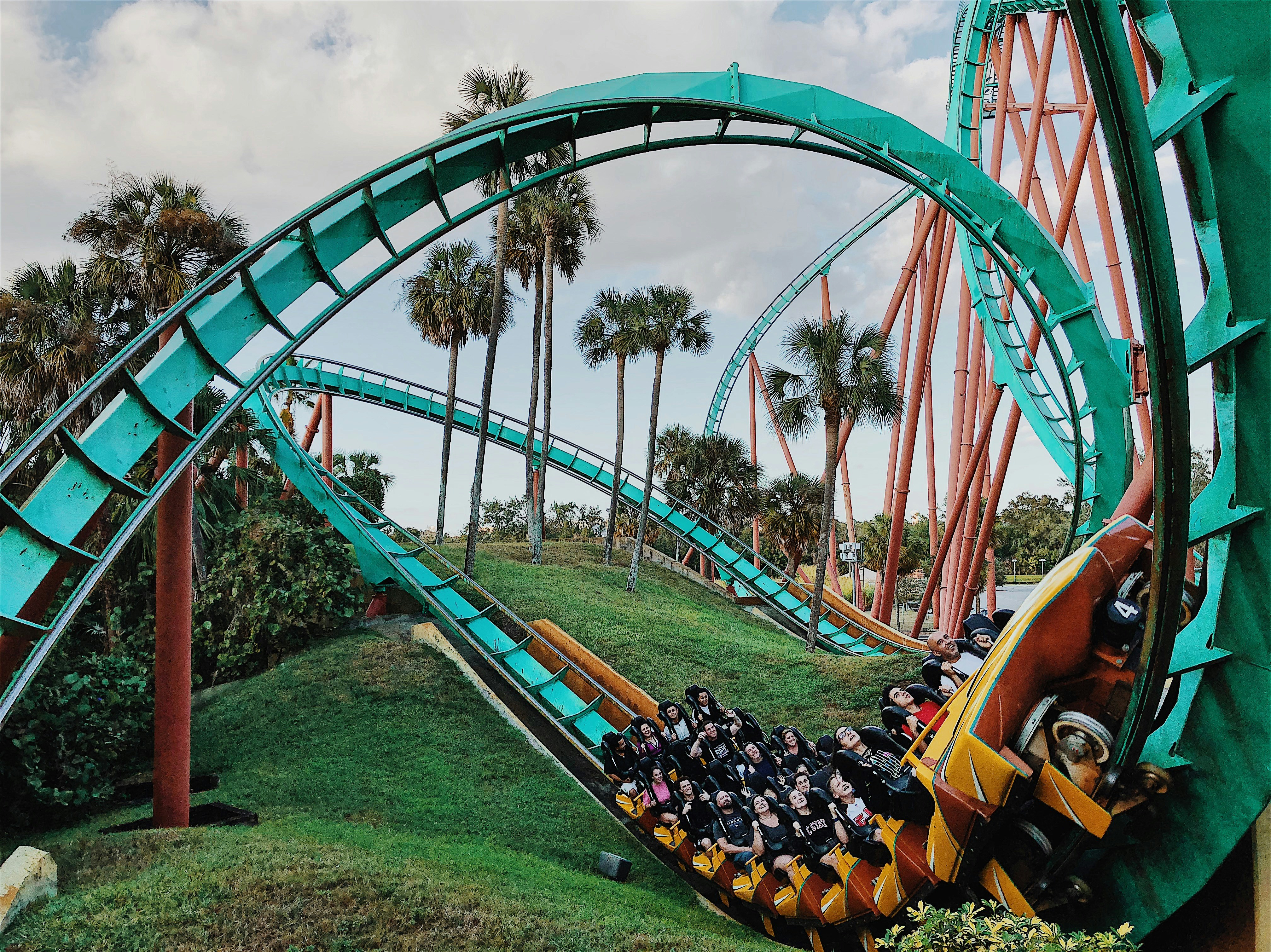
Attraction revenue management software analyses your existing ticketing and booking data to find pricing, capacity and upsell opportunities that manual reporting misses, then helps you act on them. Re-venue sits on top of your current ticketing system rather than replacing it, so your team keeps the tools they already know while gaining a live view of where revenue is being left behind.
What is attraction revenue management software?
Attraction revenue management software takes the booking and transaction data your ticketing platform already collects and turns it into pricing and capacity decisions. Instead of setting prices once a season and hoping demand matches supply, the software tracks utilisation, booking pace and price sensitivity slot by slot, then flags where a price is too low, a slot is underused, or an upsell is being missed.
For visitor attractions, this matters because demand rarely moves in a straight line. A wet Tuesday in half term behaves nothing like a dry Tuesday in March, and a static pricing calendar can't account for that. Revenue management software closes that gap.
How does dynamic pricing work for visitor attractions?
Dynamic pricing adjusts ticket prices in response to real demand signals rather than a fixed calendar. Re-venue's Demand Index scores every bookable time slot from 0 to 10 based on utilisation, booking momentum, historic performance and external factors such as weather or local events. A score of 10 means a slot is capturing its full revenue potential; anything below that points to an opportunity, whether that's a price adjustment, a targeted promotion, or a nudge to encourage booking.
This isn't blanket surge pricing. It's slot-level precision that protects your highest-demand periods from underselling while making quieter periods more attractive, without needing anyone to manually rebuild the pricing calendar every week.
Demand forecasting for theme parks and museums
Theme parks, museums and other multi-zone attractions have complex demand patterns: different zones, ticket types, and visitor segments all behave differently. Demand forecasting uses historical booking data to predict how upcoming slots are likely to perform, so pricing and staffing decisions can be made ahead of time rather than reactively.
The value isn't just knowing that Saturday afternoons sell out. It's knowing three weeks out that a specific Saturday afternoon is tracking below its usual pace, while the following Sunday is tracking ahead, and having enough lead time to do something about both.
Connecting ticketing and F&B revenue integration
Ticket revenue is only part of the picture at most attractions. Food and beverage, retail and add-on experiences often make up a significant share of total visitor spend, but this data usually sits in a separate system from ticketing, which makes it hard to see the full revenue picture per visitor or per slot.
Bringing ticketing and F&B data together means upsell opportunities can be identified and offered at the right moment in the booking journey, rather than left to in-venue signage or staff prompts alone. It also means pricing decisions can account for total visitor value, not just ticket price.
Yield optimisation without replacing your ticketing system
Attractions are understandably cautious about ripping out a ticketing platform that already works. Re-venue connects to your existing system through secure API integrations, including ROLLER, TicketingHub, SevenRooms, Smeetz, BookedIt and DesignMyNight, so your booking flow and customer experience stay exactly as they are. The optimisation layer works quietly underneath, analysing and acting on data your platform already generates.
This means implementation doesn't require re-training your team on a new booking system or migrating years of historical data. It requires connecting to the system you already run.
Improving upsell performance
Upsell performance improves when offers are timed to actual booking behaviour rather than shown to everyone at the same point in the funnel. Group size, time of booking, ticket type and price sensitivity all influence which upsells a visitor is likely to accept, and when.
Re-venue identifies these patterns and surfaces the right offer, whether that's a fast-track upgrade, a food and drink bundle, or an add-on experience, at the point in the journey where it's most likely to convert, without adding friction to a booking that would otherwise complete cleanly.
How Re-venue works for visitor attractions
Re-venue connects to your existing booking platform, analyses utilisation, pricing and booking momentum across every time slot, and scores each one using the Demand Index. From there, it recommends and can automate pricing adjustments, capacity rules and upsell prompts, all visible through a single dashboard. Clients typically see 15 to 30% additional revenue captured from existing traffic, without changing how visitors book or how staff operate day to day.
Frequently asked questions